

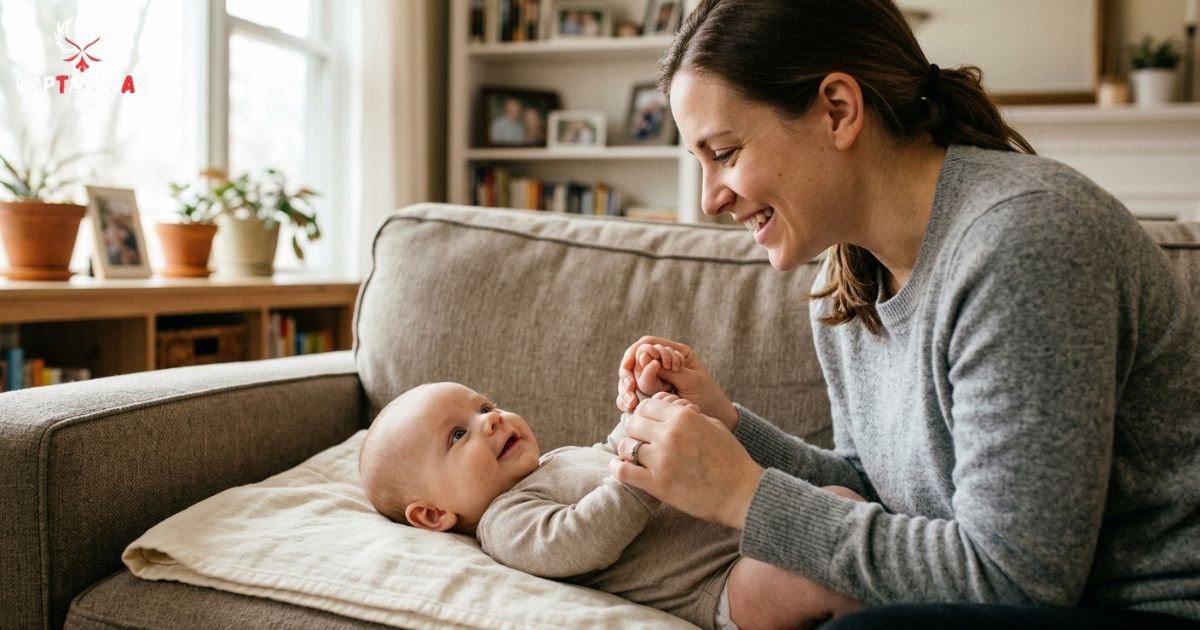
Your 1-month-old has arrived, and you’re already wondering: What do I actually do with them? Between feedings, diaper changes, and precious sleep moments, playtime can feel mysterious. But here’s the truth your baby is ready to engage with the world right now. And the best part? You already have everything they need.
At 1 month old, your baby is still adjusting to life outside the womb but they’re ready for play. Start with gentle sensory activities: talking, skin-to-skin contact, tummy time, and visual tracking toys. Activities don’t need to be complex; your voice and face are baby’s favorite stimuli. Aim for short, frequent interactions (a few minutes at a time), watch for overstimulation signs (fussiness, yawning, looking away), and remember: bonding is the real win.
What’s Happening at 1 Month Old? (Developmental Context)
Your newborn isn’t a blank slate, they’re a rapidly developing organism with senses that are sharpening daily. Understanding what’s happening in your baby’s brain and body right now will help you choose activities that actually matter.
Sensory Awakening
By 1 month, your baby’s hearing is fully developed (it was complete before birth). They can see objects 8–12 inches away with reasonable clarity, and their sense of smell is powerful. They recognize your unique scent and prefer it to others. This narrow visual range matters: it’s designed so baby can see your face when you’re holding them close.
Early Social Responsiveness
At 1 month, your baby is beginning to recognize that certain faces and voices belong to their favorite people. They won’t smile intentionally yet (that comes around week 4–6), but they’re tracking your face, learning your voice, and storing neural patterns for later.
Motor Skill Emergence
Your baby’s movements are still jerky and unpredictable. They have strong reflexes (like grasping and rooting), but purposeful movement is just beginning. This is the month of foundation-building for all the motor skills that come later.
No Object Permanence
This is key: if something disappears from baby’s view, it doesn’t exist to them yet. This affects how they play and what captures their attention. Peek-a-boo won’t land with its full magic until later, but the groundwork starts now.
Why Activities Matter at This Age
The first three months of life are a critical window for brain development. Newborns aren’t just sleeping, they’re experiencing rapid neural pathway formation. Every sound they hear, every face they see, every touch they feel creates neural connections.
When you talk to your baby, you’re literally wiring their language centers. When you hold them skin-to-skin, you’re regulating their nervous system and building secure attachment architecture. When you sing, you’re activating auditory processing and memory pathways. None of this is wasted effort, it’s foundational.
Responsive interaction (you noticing baby’s cues and responding) builds secure attachment, which predicts better emotional regulation, social skills, and resilience throughout life. The best activity, then, is simply being present and responsive to your baby.
Read More: Caption for Baby Sweet & Adorable Ideas for Every Moment
Weeks 1–2: “Adjustment Phase” (Recovery & Stabilization)
Your newborn is still groggy and stabilizing. They’re adjusting to breathing air, regulating temperature, managing hunger in a whole new way. Activities during these early days are gentle, short (1–3 minutes), and primarily focused on touch and voice.
What Baby Can Do This Week
- Recognize your voice and smell (they heard you during pregnancy)
- Track objects very briefly, not consistently
- Respond to touch through reflexes (rooting, grasping)
- Prefer faces over all other objects
- Sleep 16–18 hours per day
Top Activities for Weeks 1–2
Skin-to-Skin Contact (5–10 minutes)
What to do: Lie down or recline comfortably. Place your baby directly on your bare chest, wearing only a diaper. Cover baby loosely with a blanket. Just be together. Let baby feel your heartbeat and warmth.
Why it matters: Skin-to-skin contact is one of the most powerful tools in early parenting. It regulates your baby’s heart rate, temperature, and breathing. It lowers stress hormones for both of you and releases oxytocin, the bonding hormone in your brain. Newborns calm faster, sleep better, and cry less with regular skin-to-skin time.
Safety tip: Never fall asleep while holding baby directly on your chest (risk of suffocation). If you’re exhausted, try supervised rest on a firm surface with baby in a safe sleep space nearby.
Frequency: Several times daily, especially after feeding or when baby is fussy. There’s no such thing as too much skin-to-skin contact at this age.
Gentle Talking & Voice Recognition (Throughout the day)
What to do: Talk to your baby constantly. Narrate your day: “Now I’m changing your diaper. I see you’re looking at that light.” Describe what baby might be feeling: “You’re probably hungry right now.” Use animated, high-pitched tones (baby-directed speech). Sing songs, read texts aloud, or just have one-sided conversations.
Why it matters: Your baby recognized your voice in utero. Hearing it now is deeply soothing. Talking to your baby, even one-sidedly, is building language neural pathways. Research shows babies whose parents talk to them more develop larger vocabularies and stronger language skills by age 2.
Bonus benefit: Talking to your baby builds your confidence as a parent. It helps you feel connected and purposeful during long days of caregiving.
Gaze Gazing (2–3 minutes, several times daily)
What to do: Sit comfortably and position your face 8–12 inches from baby’s face. Make eye contact. Let baby look at your face. Don’t force it, just be present. You can smile, make soft sounds, or simply be still.
Why it matters: Face recognition is one of the most important developmental achievements of the first weeks. When you gaze into each other’s eyes, your nervous systems synchronize, and mutual gazing triggers a cascade of bonding neurochemistry. This is attachment-building in real time.
What you’ll notice: Early on, baby may stare blankly or seem to look “through” you. By week 2, they’ll begin tracking your face more deliberately. By week 3–4, they may hold your gaze longer and show early signs of smiling.
Watch for overstimulation: If baby turns away, yawns, or spaces out, pause. This is a signal baby needs a break. Respect it and try again later.
Gentle Hand Exploration (2–3 minutes)
What to do: Sit with baby. Slowly, gently touch different parts of baby’s body: their tiny fingers, ears, toes, belly, cheeks. Let them grip your finger (their grasp reflex will kick in). Explore their hands and feet, describing what you feel.
Why it matters: Baby is just beginning to understand that their body exists as separate from the world. Gentle touch on different body parts helps them map their own body. Tactile nerve endings are developing rapidly. This is foundation-building for body awareness and the sense of touch.
Safety note: Keep touch gentle. Avoid the face and neck. Watch for signs baby is done (pulling away, fussiness).
Soft Music or Singing (5–10 minutes)
What to do: Play soft instrumental music, lullabies, or nature sounds. Or simply sing to your baby any song, any quality. Off-key is perfect. Exaggerate rhythm and emotion.
Why it matters: Auditory pathways are developing rapidly. Music and singing activate multiple brain regions simultaneously: auditory processing, language centers, and emotional response areas. Babies exposed to music and singing early show better language development, stronger attention, and earlier literacy skills.
Research insight: A landmark study found that babies whose parents sang to them showed better language outcomes by age 2. The quality of your voice doesn’t matter—consistency and emotional warmth do.
Recognition of Overstimulation Signs
Even though you’re doing gentle activities, newborns tire quickly. Watch for these signals that baby is done:
- Yawning or rubbing eyes
- Looking away or spacing out (“glazed” expression)
- Arching back or stiffening arms/legs
- Sudden fussiness or crying
- Hiccupping, sneezing, or rapid breathing (body’s “reset” signals)
If you notice any of these, pause. Put baby down for a nap, dim the lights, reduce noise. This isn’t failure it’s your baby communicating their capacity. Overstimulation is normal and recoverable. Rest for 30 minutes to an hour, and baby will reset.
Read More: 1 Month Old Baby Sleep Schedule Wake Windows, Naps & What’s Actually Normal
Weeks 2–3: “Awakening Phase” (Eyes Opening, Responsiveness Rising)
By week 2–3, you’ll notice a shift. Baby is awake more. They’re following your face with their eyes. Maybe a coo here and there. The personality is starting to peek through.
What Baby Can Do This Week
- Follow a slow-moving toy briefly with their eyes (visual tracking beginning)
- Coo or make vowel sounds (“ooh,” “ah”)
- Distinguish caregivers from strangers (they prefer you)
- Spend more waking time up to 8–10 hours daily
- Grip reflex is still strong; can hold objects placed in their hand
Top Activities for Weeks 2–3
Tummy Time (2–5 minutes, 1–2 times daily)
What to do: Place baby on their stomach, awake and supervised. Start with just 2–3 minutes. Lay on the floor next to them or place a toy just out of reach so baby has something to reach toward. Gradually increase duration as baby gets stronger.
Why it matters: Tummy time is non-negotiable for motor development. It strengthens the neck, shoulders, and back muscles. This is the foundation for everything that comes later: head control (by 2 months), rolling (by 4–5 months), crawling (by 6+ months). Every muscle baby needs for sitting up, crawling, and walking is being built right now.
Safety is paramount:
- Baby should never sleep on their stomach. Tummy time is only for awake, supervised play.
- Clear the area of blankets, pillows, or anything that could obstruct breathing.
- Support baby’s head gently if they tire.
- Never force it. If baby gets frustrated, pause and try again later.
Progression: In week 2, baby may barely lift their head. By week 3, you’ll see them turning their head side-to-side. By end of month, some babies can briefly hold their head up. All of this is normal progress.
Pro tip: Try tummy time a minute or so after diaper changes. That way, you’re ensuring baby gets some daily practice without it feeling like a chore.
Visual Tracking with Toys (3–5 minutes)
What to do: Sit in front of baby or beside them during tummy time. Hold a bright rattle, toy, or even a high-contrast card 12 inches from their face. Slowly move it side-to-side. Watch baby’s eyes follow. Pause. Move again.
Why it matters: Visual tracking develops the eye muscles and the neural circuits connecting eyes to brain. Baby is learning that their eyes can follow moving objects. This is the beginning of object permanence, cause-and-effect understanding, and focused attention.
What to use: Bright colored rattles, high-contrast toys, even your own colorful scarf or ribbon.
Pace matters: Move slowly. Fast movements are overwhelming. Let baby catch up with their eyes.
Rattle Exploration (2–3 minutes)
What to do: Place a soft rattle in baby’s hand. Baby’s grasp reflex will automatically close their fingers around it. Hold it there gently. Optionally, shake it near baby’s ear so they hear the sound they’re “making.”
Why it matters: Hand strength and coordination develop. Baby begins to understand cause-and-effect: I made that sound. This is the first glimmer of agency and self-efficacy.
Black & White Contrast Cards (1–2 minutes, several times daily)
What to do: Print or download simple high-contrast images (black/white checkerboards, simple face drawings, bold geometric patterns). Show them at 8–12 inches from baby’s face for 1–2 minutes.
Why it matters: Newborn vision is sharpest with high contrast. These images naturally draw baby’s attention and develop visual pathways. They’re like “brain food” for vision development.
DIY version: Print high-contrast images from free online templates. Laminate them if you want them to last.
Mirror Play (2–3 minutes)
What to do: Hold baby up to a safe infant mirror (or hang one where baby can see it safely during tummy time). Tap on it. Talk about what they see. Point gently.
Why it matters: Baby is starting to notice their reflection. This is the beginning of self-recognition and body awareness. They don’t yet understand it’s them, but they’re fascinated by the face.
Safety: Ensure mirror is shatterproof, securely mounted, and cannot fall on baby. Avoid mirrors with small decorative pieces.
Patty-Cake Prep (2 minutes)
What to do: Hold baby’s hands gently. Clap them together slowly while singing or talking. No rhythm pressure baby’s reflexes do the work.
Why it matters: Introduction to rhythm and turn-taking. Baby’s hand coordination improves. It’s adorable, and it builds your confidence in interactive play.
Read more: 1-Month-Old Baby Weight in kg: What’s Normal & How Much They Should Gain
Weeks 3–4: “Connection Phase” (Personality Emerging, Smiles Beginning)
By week 3–4, something magical happens: your baby smiles. Not gas. A real, responsive smile. Their personality starts showing up. Interaction deepens.
What Baby Can Do This Week
- Smile in response to your face or voice (social smile, not reflexive gas smile)
- Coo and gurgle more expressively
- Track objects across a wider range
- Recognize patterns and familiar faces
- More alert during daytime; possible longer sleep stretches at night
- Beginning to understand turn-taking in “conversation”
Top Activities for Weeks 3–4
Responsive “Conversation” (5–10 minutes, multiple times daily)
What to do: When your baby coos, gurgles, or makes sounds, respond. Coo back. Use words: “Yes! You’re talking to me!” Pause and listen. Wait for baby to “respond” again. Take turns, like a real conversation.
Why it matters: This is foundation-building for language acquisition. When babies experience back-and-forth interaction where their sounds are acknowledged and responded to—they develop the neural scaffolding for language. Babies whose parents engage in this turn-taking conversation show larger vocabularies by age 2.
Research insight: Studies show that conversational speech (vs. background talking at baby) is most powerful for language development. The turn-taking itself matters.
What you’ll notice: Early on, baby’s “responses” might just be more random cooing. By week 4, they may intentionally coo in response to you. By month 2, you’ll see clear turn-taking.
Bonus: This builds your confidence that your baby is a person with thoughts and preferences, even this early.
Dance & Sway (3–5 minutes)
What to do: Hold baby securely on your shoulder (supporting their head and neck) or cradled in your arms. Put on music or simply sway to an internal rhythm. Gently bounce, sway side-to-side, or slow-dance.
Why it matters: Baby’s vestibular system (the balance and spatial awareness center in the inner ear) is developing through gentle movement. Swaying is deeply calming; it mimics intrauterine movement. It’s also grounding for anxious or overwhelmed parents.
When it works magic: Fussy babies often settle with swaying. New parents often find it meditative.
Gentle Leg Cycling (Bicycle Legs) (2–3 minutes)
What to do: Baby on their back, facing you. Gently hold their calves or ankles. Move their legs as if they’re pedaling a bicycle—slowly, rhythmically. Say “go” and “stop” to build rhythm awareness.
Why it matters: Leg muscles strengthen. Motor planning develops. Bonus: This sometimes helps babies with gas or digestion, bringing relief.
Reading Picture Books (5–10 minutes)
What to do: Sit with baby. Read any book aloud, board books, picture books, even a novel. Use animated tones. Point to pictures. Describe what you see.
Why it matters: Auditory development accelerates. Baby doesn’t understand words yet, but rhythm, tone, and your engagement register deeply. Early reading exposure predicts better literacy later. Research shows reading to babies from birth strengthens language centers in their brains.
What to read: High-contrast books are ideal, but honestly, any book works. Baby responds to your engagement, not the book’s quality.
Baby Massage (5–10 minutes, 2–3 times weekly)
What to do: Warm some gentle lotion or oil (test for skin sensitivity first). In a quiet, warm space, gently massage baby’s arms, legs, chest, and back with slow, firm strokes. Avoid the face and neck. Talk or sing softly.
Why it matters: Massage is profound for newborn development. It:
- Reduces stress hormones and promotes relaxation
- Improves sensory development and body awareness
- Enhances circulation and digestion
- Strengthens bonding through nurturing touch
- Improves baby’s sleep quality
Research insight: Babies who receive regular massage cry less, sleep better, and have fewer digestive issues. Parents who massage their babies report better emotional connection and increased confidence.
Technique: Gentle pressure. Use long, smooth strokes. Follow baby’s cues if they seem uncomfortable, stop.
Silly Faces & Sounds (3–5 minutes)
What to do: Make exaggerated facial expressions: wide-open smile, puckered lips, scrunched nose, raised eyebrows. Add silly sounds: “ba-ba-ba,” raspberries blown on your lips, tongue clicks, gentle whistles. Encourage baby to imitate.
Why it matters: Baby is learning facial recognition and beginning to imitate. Imitation is one of the primary ways babies learn. Your silly faces are teaching tools and entertainment combined. They strengthen baby’s attention to facial features and begin building imitation skills.
The magic: By week 4, many babies will stick out their tongue back at you. It’s hilarious and profound your baby is learning through mimicry.
Bonus: This is deeply bonding and joy-filled. It reminds you why you love this tiny human.
Read More: How to Feed a Baby Breast Milk A Complete Feeding Guide
Signs of Overstimulation (Watch for These)
Even with the best activities, 1-month-olds tire quickly. Overstimulation is not a failure on your part, it’s a sign the baby has reached capacity. Learn to recognize these signals:
- Yawning or rubbing eyes classic sleepiness signal
- Looking away or “spacing out” glazed expression; baby is tuning out
- Arching back or stiffening body protecting itself from input
- Sudden fussiness or crying overwhelmed response
- Hiccupping, sneezing, or rapid breathing body’s reset mechanism
- Trembling or jerky movements sign of stress (vs. normal newborn jerking)
If you see these: Stop the activity immediately. Dim lights, reduce noise, offer a nap or skin-to-skin time. Baby will reset within 30 minutes to an hour. This is normal and recoverable.
Conclusion
Your 1-month-old’s job is to adjust to the outside world and yours is to make that transition loving and engaging. You don’t need fancy toys or a Pinterest-perfect nursery. Talk to your baby. Hold them. Watch them. Respond when they cook. Sing off-key. Make silly faces. Rest when they rest.
FAQs
How much tummy time should my 1-month-old have?
Aim for 15–30 minutes total per day, spread across multiple sessions. Start with 2–3 minutes, several times daily, and gradually increase. By end of month, working toward 30 minutes daily is ideal. The key is consistency, not duration.
Is my baby too young for activities?
Absolutely not. Babies start learning from day one. Talking, singing, and skin-to-skin contact are all activities and all matter. The best “activity” is responsive interaction with you.
What if my baby doesn’t seem to respond or enjoy activities?
Totally normal. Newborns sleep a lot, and their responses are subtle. Keep trying. You’ll see more engagement as the month progresses. And remember: even passive exposure counts.
Can I use activity mats or play gyms for 1 month?
Yes, mats are safe for supervised tummy time and visual tracking. Gyms with overhead toys are great for eye tracking. Ensure baby can’t pull toys down onto their face. Always supervise.
What’s the best toy for a 1-month-old?
Your face and voice are #1. High-contrast items, soft rattles, and mirrors are wonderful additions. Avoid toys with small pieces, long strings, or anything not designed for newborns.
Can tummy time cause SIDS?
No. Supervised tummy time during awake play is safe and recommended. SIDS risk increases with stomach sleeping, not supervised play. Always place baby on their back to sleep.
How do I know if my baby is developing normally?
Watch for: eye tracking, response to sound, grasping, and increasing alertness during waking hours. Your pediatrician tracks development at checkups. If concerned, ask.
Does activity hurt a baby’s sleep?
No. Appropriate stimulation actually helps babies sleep better by tiring their brains. Over-stimulation can make sleep harder, so watch for those overstimulation signs.
I’m exhausted. Do I have to do all these activities?
No. Pick 2–3 activities you enjoy and do those consistently. Your mental health matters. A calm, present parent beats an exhausted parent doing “everything.” Baby thrives with responsive presence, not perfection.
