

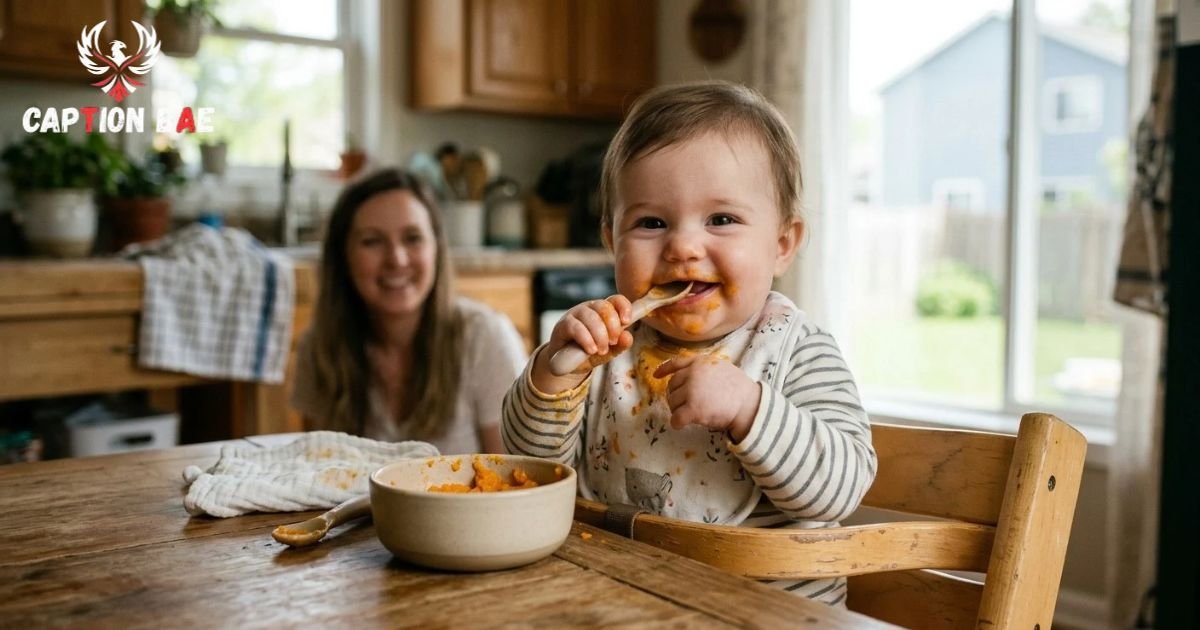
A 6 month old meal plan starts small: one solid meal a day, about 1–2 tablespoons, alongside your usual 4–6 breast milk or formula feeds. Over four weeks, you add a second meal, lumpier textures, and the common allergen foods. Milk stays the main source of nutrition until your baby turns 1.
Is Your Baby Ready for Solids?
Age is a guide, not a finish line. The Dietary Guidelines for Americans and the AAP recommend introducing foods other than breast milk or formula at about 6 months. The CDC also says introducing foods before 4 months is not recommended.
Look for these signs of readiness:
- Sits up with little or no support
- Has good head and neck control
- Brings toys and hands to their mouth
- Shows interest when you eat (watching, reaching, opening their mouth)
If your baby pushes food out with their tongue every time, don’t worry. Wait a few days and try again.
What Does a 6 Month Old’s Day Look Like?
Here is a sample day for Week 2 and beyond. Times are flexible, so follow your baby’s rhythm, not the clock.
| Time | What happens |
| 6:30–7:00 AM | Milk (breast or bottle) on waking |
| 9:00–9:30 AM | Milk, then breakfast solids (small amount) |
| 12:00–12:30 PM | Lunch solids, then milk |
| 3:00–3:30 PM | Milk |
| 5:30–6:00 PM | Optional dinner solids (Weeks 3–4), then milk |
| 7:00 PM | Milk before bed |
Week 1 looks the same with only one solid meal a day (usually lunch).
Read More: 6 Month Old Feeding Schedule: Sample Day, Amounts & Foods
How Much Milk Does a 6 Month Old Need?
Most 6 month olds take about 4–6 milk feeds a day, roughly 24–32 ounces total, according to Huckleberry’s pediatric dietitian-written guide. A little above or below that is common. Don’t cut milk back just because solids have started. Babies reduce milk gradually, usually over the next several months.
A good sign you’re on track is steady growth and about six wet diapers a day.
Should You Give Milk Before or After Solids?
Guidance varies. The NHS (UK) suggests milk after solids, since a baby’s tummy is small. UNICEF suggests offering first foods after breastfeeding. HealthLink BC says either order is fine.
The practical answer: do whatever keeps your baby calm. If your baby is very hungry and fussy, offer some milk first, then solids, then more milk if wanted. If your baby is happy and rested, offer solids first. The total milk across the day matters more than the order.
How Many Meals and How Much Food Does a 6 Month Old Need?
A 6 month old usually starts with one solid meal a day and works up to two or three small ones over the first month or two a day and works up to two or three small ones over the first month or two. Each meal begins at 1–2 teaspoons to 1–2 tablespoons per serving. Let your baby decide how much to eat, and stop when they show they’re full.
Starting amounts vary slightly by source (for example, HealthLink BC suggests 1–2 teaspoons at a time, while Huckleberry suggests 1–2 tablespoons). All of them agree on the same idea: small and slow.
| Stage | Meals/day | Amount per meal | What it looks like |
| Week 1 | 1 | 1–2 tsp up to 1–2 tbsp | A few spoonfuls or bites |
| Week 2 | 1–2 | 1–2 tbsp | One food or a simple pair |
| Week 3 | 2 | 2–3 tbsp | Mixed foods, lumpier |
| Week 4 | 2–3 (if ready) | 2–3 tbsp | Small, varied meals |
Hunger cues: reaching for food, opening their mouth, leaning forward.
Fullness cues: closing their mouth, turning their head, pushing the spoon away.
The 4-Week 6 Month Old Meal Plan
This plan works for purées, baby-led weaning (BLW), or a mix (see the comparison table below). Cook foods until soft, serve them cooled, and never leave your baby alone while eating.
The Starter Ladder™
Here’s the framework behind the plan. Each week climbs one rung:
- Rung 1: Taste. One food at a time.
- Rung 2: Repeat. A second meal and repeated exposures.
- Rung 3: Mix. Combined foods, lumpier textures, allergens.
- Rung 4: Rhythm. Small family-style meals.
⚑ Needs your input: Add real parent-tested results, a pediatric RD’s comments, or your brand’s own feeding data here before publishing.
Week 1: One Food, Once a Day
Offer a single food at lunch. Start with iron-rich foods, since a baby’s iron needs rise around this age.
| Day | Food (once a day) |
| Mon | Iron-fortified infant oatmeal, mixed with breast milk or formula |
| Tue | Mashed avocado |
| Wed | Puréed or finely minced chicken |
| Thu | Cooked, mashed sweet potato |
| Fri | Mashed lentils or black beans |
| Sat | Cooked broccoli (soft florets or purée) |
| Sun | Mashed banana |
Week 2: Add a Second Meal
Offer solids at breakfast and lunch (or just once if your baby isn’t interested). Pair a new food with a familiar one.
- Sample day A: Oatmeal with mashed pear | Mashed beans with soft-cooked carrots
- Sample day B: Plain whole-milk yogurt with mashed peaches | Minced turkey with mashed squash
Week 3: Mix It Up
Move toward lumpier, mashed textures. Mix foods, and introduce allergen foods (see next section).
- Sample day A: Oatmeal with a thin swirl of smooth peanut butter | Mashed salmon with sweet potato
- Sample day B: Soft scrambled egg | Lentils with mashed potato and green beans
Week 4: Small Family-Style Meals
If your baby is interested, work toward two or three small meals. Keep texture soft and pieces safe.
- Breakfast: Yogurt with mashed berries
- Lunch: Shredded chicken, rice, soft-cooked peas (mashed)
- Dinner (optional): Soft pasta strips with mashed beans and avocado
If your baby isn’t ready for three meals, two is perfectly fine.
Read More: 8 Month Old Baby: Milestones, Sleep, Feeding & Safety
Best First Foods (and Why Iron Comes First)
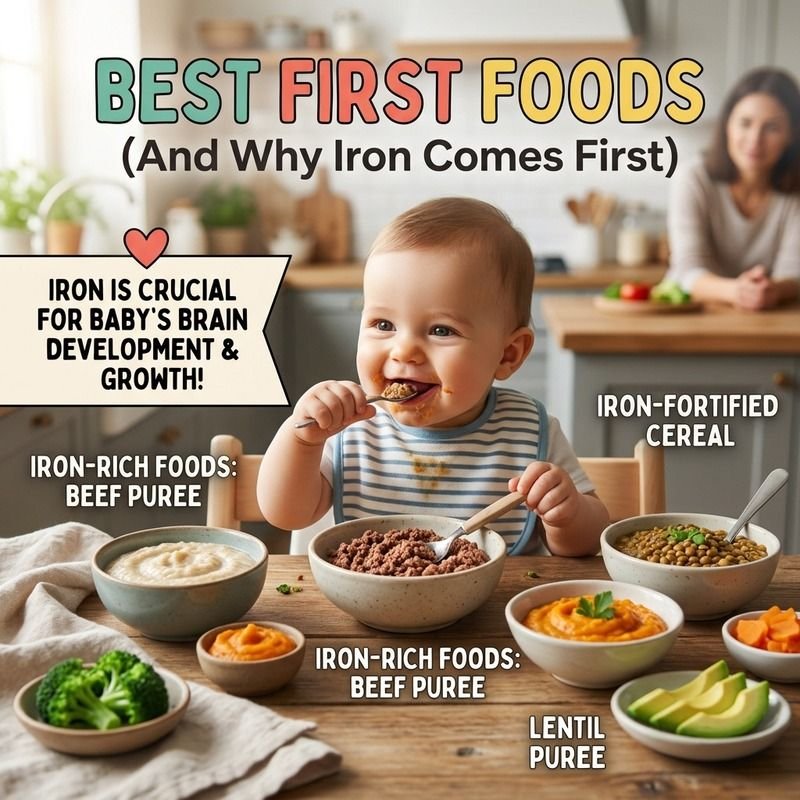
At about 6 months, a baby’s stored iron starts to run down, and breast milk isn’t a strong source of iron. That’s why Happy Family’s dietitians and HealthLink BC highlight iron-rich foods. HealthLink BC suggests offering them at least twice a day as your baby’s eating grows.
Iron- and zinc-rich foods to start with:
- Iron-fortified infant cereal (oatmeal, multigrain, barley)
- Minced or puréed beef, chicken, turkey, or fish (no bones)
- Eggs, cooked until the yolk is firm
- Beans, lentils, and chickpeas, mashed
- Tofu, cooked and mashed
Add healthy fats and color:
- Avocado, olive oil, full-fat plain yogurt
- Soft-cooked veggies (broccoli, spinach, peas, squash, carrots)
- Ripe fruit (banana, pear, peach, mango)
A flavor tip: The NHS suggests starting with less-sweet vegetables (like broccoli and spinach) to help babies accept a wider range of tastes. Ask your pediatrician if your baby should take an iron or vitamin D supplement, especially if breastfed.
How to Introduce Allergens Safely
Old advice said to delay peanuts, eggs, and other allergens. That has changed. Research, including the 2019 AAP clinical report by Greer and colleagues, shows that introducing common allergen foods early may help lower the risk of food allergies. CDC guidance says to introduce potentially allergenic foods along with other foods, not to delay them.
The common allergens (US “Big 9”): milk (in yogurt or cheese, not as a drink), eggs, fish, shellfish, tree nuts, peanuts, wheat, soy, and sesame.
Steps:
- Choose a good day. Start when your baby is healthy, and at home early in the day so you can watch for reactions.
- Offer one allergen at a time, in a small amount, in a safe form (thin peanut butter mixed into oatmeal, not a spoonful of nut butter and never whole nuts).
- Watch for signs of a reaction: hives, swelling, vomiting, or trouble breathing. Trouble breathing is an emergency. Call 911.
- Keep serving it. If your baby tolerates a food, keep offering it regularly.
Important exception: If your baby has severe eczema or an egg allergy, talk to your pediatrician before introducing peanuts, as the CDC advises.
Some brands still suggest waiting 3–5 days between new foods. That’s a fine, cautious option for the first few single foods. But you don’t need to delay allergens once your baby is eating a few foods well.
Purées or Baby-Led Weaning? The Same Plan Both Ways
There’s no single right way. The NHS says the most important thing is that your baby eats a wide variety and gets the nutrients they need. Many families combine both.
| Purées / spoon-feeding | Baby-led weaning (BLW) | |
| How | You spoon-feed smooth, then lumpy foods | Baby feeds themselves soft finger-sized pieces |
| Week 1 | Single-food purée (e.g., sweet potato) | A soft strip of cooked sweet potato |
| Iron foods | Iron-fortified cereal, puréed meat | Soft strips of cooked meat, mashed beans on a pre-loaded spoon |
| Allergens | Stir into purée (peanut butter, egg) | Thin spread on toast strips, soft scrambled egg |
| Mess level | Medium | High |
| Watch for | Moving to lumps by 9 months (HealthLink BC) | Safe size and shape of pieces |
Whichever you choose, keep your baby seated upright in a high chair and stay with them. Offering lumpy textures from around 6–7 months helps your baby learn to chew.
Read More: 7 Month Old Meal Ideas: Safe Foods, Portions & 7-Day Plan
Foods and Drinks to Avoid (and Gagging vs. Choking)
Avoid or modify:
- Honey until age 1 (risk of infant botulism)
- Cow’s milk as a drink until 12 months (it’s fine cooked into foods, and yogurt and cheese are okay)
- Whole nuts, popcorn, hard raw veggies, and whole grapes (cut grapes into quarters; grate or cook hard veggies and fruits)
- Added salt and sugar, and sugary drinks and juice
- Nut butter off the spoon. Thin spread only, or mix into cereal
Water: Small amounts of water in an open cup with meals are fine from around 6 months. Ask your pediatrician how much is right for your baby.
Gagging vs. Choking
Gagging is noisy and normal. Your baby may cough, sputter, or turn red as they learn to move food around. Choking is usually silent, with no sound, no cough, and no breath. If you suspect choking, act immediately. Consider taking an infant CPR and choking class before you start solids.
Breastfed vs. Formula-Fed Babies: What Changes?
Mostly, nothing. The solid plan is the same. The differences are small:
- Breastfed babies may especially need iron-rich foods and may need supplements. Ask your pediatrician.
- Formula-fed babies are often on a more predictable feeding schedule, and UNICEF notes that non-breastfed babies may eat solids more often.
- In both cases, keep milk feeds steady while solids ramp up.
Pouches, Jars and Baby Cereal: What to Know
Store-bought food is convenient. The NHS advises using pouches and jars only occasionally, squeezing food onto a spoon rather than letting babies suck from the pouch, which can raise the risk of tooth decay. Check labels for added sugar.
On baby cereal and packaged foods, variety helps. Rotate grains (oatmeal, barley, multigrain) rather than relying on one. The FDA has an ongoing program on heavy metals in baby food, so ask your pediatrician for current advice.
Verify before publishing: Confirm the latest FDA and AAP guidance on heavy metals and rice cereal.
Read More: Formula for a 6 Month Old: How Much, How Often, and What to Know
Shopping List, Prep and Freezer Plan
Week 1 starter list: infant oatmeal, avocado, chicken, sweet potato, lentils or black beans, broccoli, bananas
Prep plan:
- Cook and purée (or mash) a batch of one or two foods.
- Freeze in an ice cube tray, then move to a labeled freezer bag with the date.
- Thaw in the fridge, not on the counter.
- Check USDA or your pediatrician’s guidance for safe storage times.
Keep a simple log: write down each new food, the date, and any reaction. It helps you track allergens and tell your pediatrician what’s been tried.
What If Your Baby Refuses, Spits Out or Eats Less?
All normal. Here is what helps.
- Refusing: Don’t force it. Babies may need to try a food 10 or more times before accepting it (HealthLink BC and Happy Family both say so). Pair new foods with a familiar one.
- Spitting out or gumming: They’re learning to chew and swallow, and tongue movement takes practice.
- Eating less than yesterday: Teething, a cold, or a quiet appetite can cause it. If growth and wet diapers are steady, it’s usually fine.
- Constipation: Solids can change stools. Offer pears, prunes, or peaches, and call your pediatrician if it’s persistent or painful.
Conclusion
A 6-month-old’s first month of solids is about exploring, not eating full meals. Start with one or two small tastes a day, add new foods gradually, and keep breast milk or formula as the main source of nutrition. Watch for hunger and fullness cues, introduce common allergens safely, and move at your baby’s pace. Check with your pediatrician before making big changes to the plan.
FAQs
How many meals a day should a 6 month old have?
Start with one solid meal a day and build up to two or three small meals over the first month or two. Keep offering milk as usual.
How much milk does a 6 month old need with solids?
Most take about 24–32 ounces a day across 4–6 feeds. Don’t reduce milk just because solids have started.
Can a 6 month old skip a solid meal?
Yes. At this age, solids are practiced. Offer again later or tomorrow.
Can a 6 month old drink water?
Small sips in an open cup with meals are fine. Ask your pediatrician about amounts.
Can a 6 month old have honey or cow’s milk?
No honey until age 1. Cow’s milk as a drink waits until 12 months, though yogurt, cheese, and milk cooked into foods are okay.
Do I need to start with rice cereal?
No. The AAP and CDC say foods don’t need to be introduced in a particular order. Iron-rich foods are a smart place to start.
When can my baby move to three meals a day?
When your baby is eating two meals well, is interested, and growing steadily, usually by the end of the first month or a bit later.
