

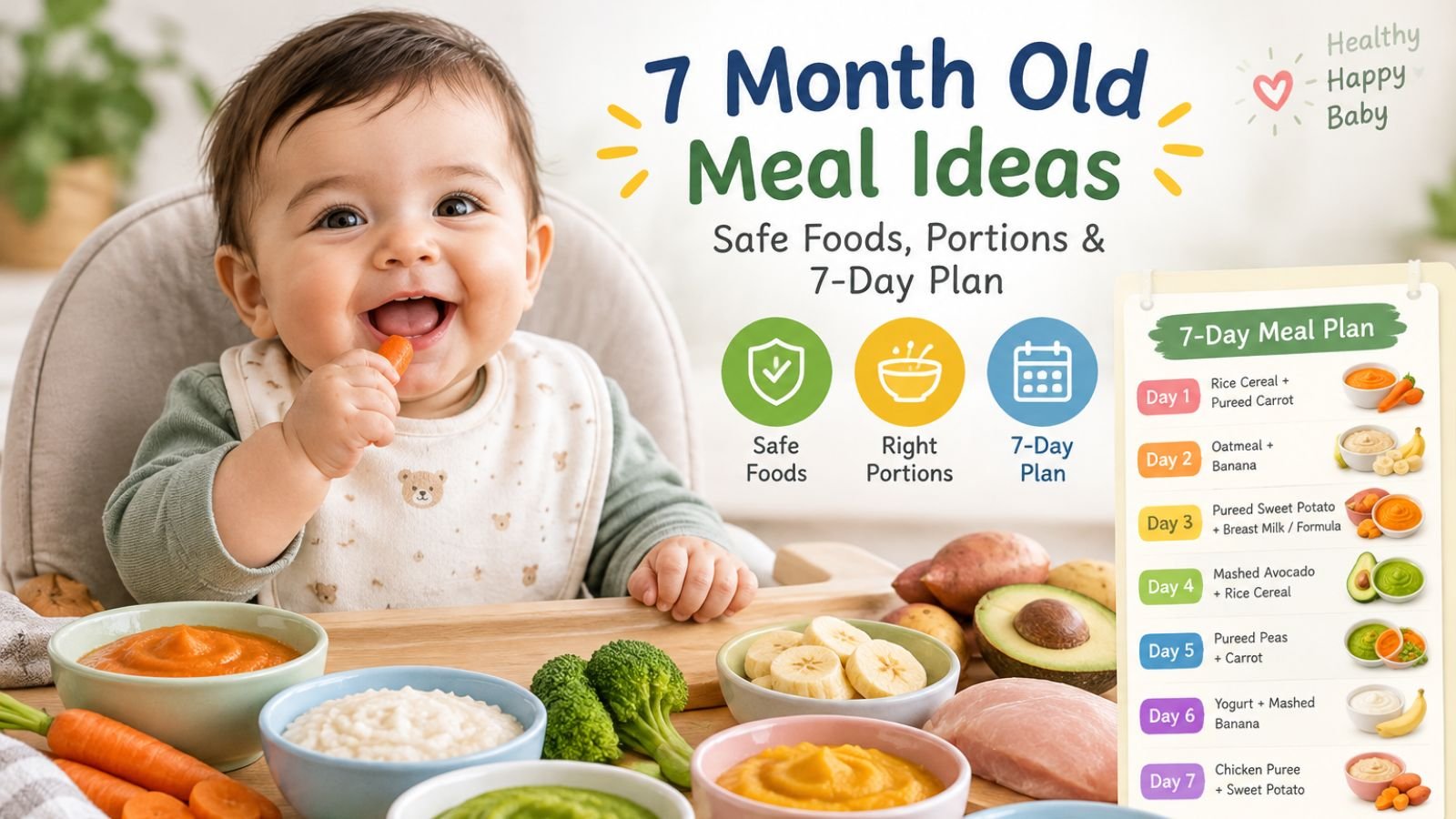
A 7-month-old can eat soft, mashed, or finger-sized foods like eggs, beans, yogurt, oatmeal, tender meat, and cooked fruits and vegetables. Start small and offer food a few times a day. Breast milk or formula is still the main source of nutrition from 6 to 12 months, according to the CDC.
What Does a 7-Month-Old’s Day Look Like?
Think of your baby’s day as milk feeds with a few small solid meals tucked in between.
The CDC says to offer something to eat or drink every 2 to 3 hours, which is 5 or 6 times a day. At this age, that’s a mix of milk and solids. Solids slowly take up more room over the coming months.
Here’s one sample day. Yours will look different, and that’s normal.
| Time | What happens |
| Wake-up | Breast milk or formula |
| Breakfast | Small solid meal, then milk if wanted |
| Mid-morning | Milk |
| Lunch | Small solid meal |
| Afternoon | Milk (and maybe a tiny snack) |
| Dinner | Small solid meal with the family |
| Bedtime | Milk |
Don’t stress about the clock. Some babies eat two solid meals a day. Others eat three. Follow your baby’s lead.
Read More: 7 Month Old Baby Reported Missing in Yucaipa: What Happened to Emmanuel Haro?
How Much Food Does a 7-Month-Old Need?
Start small. The CDC suggests offering 1 to 2 tablespoons of food and watching for signs that your baby is still hungry or full.
From there, let your baby set the pace. Appetite changes from day to day, and that’s normal.
Signs your baby wants more:
- Reaching for the spoon or your food
- Opening their mouth as food comes close
- Leaning toward the food
Signs your baby is done:
- Turning their head away
- Closing their mouth tightly
- Pushing the spoon or food away
Never force “one more bite.” Stopping when a baby says stop helps them learn to listen to their own hunger.
Worried your baby isn’t eating enough? Ask your child’s doctor. They can check growth and give advice that fits your baby.
The Iron-First Plate: Build Any Meal in 3 Steps
Around 6 months, a baby’s iron stores start to run low. That’s why iron-rich foods matter so much right now. The Dietary Guidelines for Americans specifically recommend including foods rich in iron and zinc, especially for breastfed babies.
Here’s an easy way to build any meal. Call it the Iron-First Plate. (It’s a simple framework, not an official guideline.)
1. Start with iron. Pick one:
- Mashed or ground beef, chicken, turkey, or lamb
- Egg
- Mashed beans or lentils
- Iron-fortified infant cereal (oat, barley, or multigrain)
- Boneless, flaked fish
2. Add a color. Bright fruits and vegetables bring vitamin C, which helps your baby absorb iron from plant foods like beans and cereal.
- Strawberries, mango, or cantaloupe
- Bell pepper, tomato, or broccoli
- Sweet potato or butternut squash
3. Add soft fat. Fat helps your baby feel full and supports growth.
- Avocado
- Full-fat plain yogurt
- A little olive oil stirred in
Example: shredded chicken + steamed broccoli + avocado. That’s a complete, baby-friendly meal in about 10 minutes.
A quick note on cereal. The CDC recommends offering a variety of fortified infant cereals, like oat, barley, and multigrain, instead of only rice cereal. Rice cereal alone can raise a baby’s risk of arsenic exposure.
Read More: 7 Months Old Baby Caption Ideas for Cute Moments
Purees, Mashed Foods, or Baby-Led Weaning at 7 Months?
All three are fine. The best choice is the one that keeps mealtimes safe and calm for your family.
| Method | What it looks like | Good for | Watch out for |
| Purees (spoon-fed) | Smooth or slightly thick foods on a spoon | Easy iron, less mess to plan | Moving to thicker textures over time |
| Mashed and lumpy | Fork-mashed foods with soft lumps | The “in-between” stage most 7-month-olds love | Lumps that are too big or hard |
| Baby-led weaning (finger foods) | Soft strips or pieces baby grabs | Practicing self-feeding and chewing | Right shapes and sizes; gagging is common |
You can mix them. Many families spoon-feed a mashed meal at lunch and offer soft strips at dinner.
The CDC says the first foods are easiest when mashed, pureed, or strained and very smooth. It also says to introduce thicker, lumpier foods as your baby’s skills develop. Your baby might cough, gag, or spit up while adjusting, and that’s part of learning.
7 Month Old Breakfast Ideas
Keep breakfast simple. Mornings are busy.
- Iron-fortified oatmeal mixed with breast milk, formula, or water, topped with mashed banana
- Soft scrambled egg in thin strips or small pieces
- Plain whole-milk yogurt with mashed berries (cut or mash berries first)
- Mashed avocado on a soft strip of toast
- Banana-egg pancakes: mash a ripe banana with an egg, cook in a pan, and cut into strips
- Cooked apple or pear mashed into oatmeal
- Sweet potato mash with a little cinnamon
- Veggie frittata cut into thin fingers
Time-saver: make a batch of pancakes or frittata fingers once and refrigerate or freeze them for the week.
7 Month Old Lunch Ideas
- Mashed black or kidney beans with soft-cooked rice and avocado
- Shredded chicken with mashed sweet potato
- Lentil mash with soft carrots
- Well-cooked pasta with tomato sauce and finely chopped spinach (no added salt)
- Cottage cheese with mashed peaches
- Flaked salmon (no bones) with peas mashed lightly
- Tender ground beef stirred into mashed butternut squash
- Hummus thinly spread on a soft strip of toast
7 Month Old Dinner Ideas: The Family Dinner Remix
Here’s the trick that saves the most time: cook one meal, then adjust it for the baby.
Before you add salt, sugar, or strong seasonings, scoop out a baby portion. Then mash, shred, or cut it to a safe size.
| Family dinner | Baby version |
| Chicken tacos | Shredded chicken, mashed black beans, avocado strips |
| Spaghetti with meat sauce | Soft pasta pieces, finely ground meat sauce (no salt) |
| Baked salmon and broccoli | Flaked salmon (no bones), soft broccoli florets |
| Lentil soup | Mashed lentils and soft veggies, thickened |
| Roast chicken and potatoes | Tender shredded chicken, mashed potato with a bit of oil |
| Veggie omelet | Soft omelet strips |
Skip added sugar and salt for the baby. The CDC says foods with added sugars aren’t recommended for infants and young children. Mild herbs and spices like cinnamon, mild cumin, or basil are fine, and flavor helps your baby learn to enjoy variety.
Read More: 8 Months Old Baby Caption: 150+ Cute, Funny & Sweet Ideas
Finger Foods and Snacks for 7 Month Olds
Many 7-month-olds are still learning to grab small pieces, so big, soft strips are easiest for little hands.
Good soft finger foods (always cooked or soft enough to mash with a fork):
- Steamed sweet potato or carrot sticks
- Soft-cooked broccoli or cauliflower florets
- Ripe banana, peeled pear, or peach slices
- Avocado wedges
- Omelet or scrambled-egg strips
- Soft pancake or toast strips
- Thin, tender strips of meat
- Cooked, soft asparagus tips
Snack ideas (babies this age often don’t need many, since milk still does most of the work):
- Plain whole-milk yogurt
- Mashed fruit on a spoon
- A soft veggie muffin made without added sugar
- Thinly shredded cheese
The shape rule: the CDC says to cut round or cylindrical foods like hot dogs and string cheese into short, thin strips, because round pieces can block the airway. Small round foods like grapes, cherries, berries, and cherry tomatoes should be cut into small pieces.
Can a 7-Month-Old Eat Peanut Butter, Eggs, and Other Allergens?
Yes, in most cases. The CDC says to introduce potentially allergenic foods when you introduce other foods. Its list includes eggs, shellfish, nut butters, and wheat. The Dietary Guidelines for Americans say the same thing: there’s no evidence that delaying allergenic foods helps prevent allergies.
So if your baby hasn’t tried egg, peanut, dairy, or wheat yet, 7 months is not too late. It’s a good time to start.
How to do it safely:
- Check with your pediatrician first if your baby has severe eczema or an existing egg allergy. The CDC says to talk to your child’s doctor or nurse about when and how to introduce peanut foods in that case.
- Offer one new, single-ingredient food at a time. The CDC suggests waiting 3 to 5 days before adding another new food. That makes it easier to spot a reaction.
- Serve it at home, early in the day, when you can watch your baby. Avoid starting a new allergen right before nap or bedtime.
- Use the right form. Never give a spoonful or chunk of peanut butter. The CDC lists chunks and spoonfuls of nut butter as choking hazards. Instead, thin it with warm water and stir it into oatmeal or yogurt, or use a thin spread on soft toast.
- Keep offering it. Once your baby has tolerated a food, many experts recommend keeping it in the diet regularly. Ask your pediatrician what that looks like for your baby.
Do you wait 3–5 days for each allergen? Treat each allergen as its own new food. Introduce egg, then wait. Introduce peanuts, then wait. It takes a few weeks to cover them, and that’s okay.
Call your doctor right away or seek emergency help if your baby has trouble breathing, swelling of the lips or face, repeated vomiting, or widespread hives after a new food.
7-Day Meal Plan for a 7-Month-Old
Pair each meal with breast milk or formula as usual. Swap anything your baby dislikes. Introduce new foods one at a time.
| Day | Breakfast | Lunch | Dinner |
| Mon | Oatmeal + mashed banana | Mashed lentils + soft carrots | Shredded chicken + sweet potato mash + avocado |
| Tue | Scrambled egg strips + avocado | Cottage cheese + mashed peaches | Soft pasta + meat sauce (no salt) |
| Wed | Plain yogurt + mashed berries | Beans + soft rice + avocado | Flaked salmon + steamed broccoli |
| Thu | Banana-egg pancake strips | Hummus on soft toast strips + cucumber (peeled, cooked) | Tender beef + butternut squash mash |
| Fri | Oatmeal + cooked apple | Chicken + peas, lightly mashed | Veggie omelet strips + mashed potato |
| Sat | Sweet potato mash + yogurt | Black bean mash + avocado | Lentil soup (thick, mashed) + soft bread strip |
| Sun | Veggie frittata fingers | Salmon cakes (boneless) + peas | Family dinner remix of your choice |
What Should a 7-Month-Old Not Eat?
Avoid these for safety:
| Food or drink | Why |
| Honey (including in baked foods) | Can contain bacteria that cause infant botulism; wait until after age 1 |
| Cow’s milk as a drink | The CDC says to wait until after 12 months (yogurt and cheese are okay) |
| Juice, soda, sweetened drinks | Added sugars aren’t recommended |
| Added salt and sugar | Keep baby’s food plain |
| Whole nuts and seeds | Choking hazard |
| Spoonfuls or chunks of peanut butter | Choking hazard; thin it first |
| Hot dogs, sausages, large meat chunks | Choking hazard unless cut into thin, short strips (or avoided) |
| Whole grapes, cherries, berries, cherry tomatoes | Cut or mash first |
| Raw hard fruits and vegetables (raw carrot, apple) | Cook until soft, or grate/mash |
| Popcorn, chips, hard candy, whole beans | Choking hazard |
Gagging vs. choking. Gagging is common while babies learn to eat. It’s noisy, and the baby usually coughs and works the food forward. Choking is different: the airway is blocked, and the baby may be silent, unable to cough or breathe. Take an infant CPR and choking-rescue class, and ask your child’s doctor what to do if your baby chokes.
Always: have your baby sit upright in a high chair, stay within arm’s reach, and avoid feeding in the car or stroller.
Read More: 7-Month-Old Baby Killed in Brooklyn What We Know
What If My 7-Month-Old Refuses Food?
Don’t panic. Babies often make funny faces or push food away. That doesn’t mean they dislike it.
It can take 10 or more tries before a baby accepts a new food, according to Happy Family Organics’ dietitian-written guidance, and NHS advice says up to 10 tries or even more. Keep offering the food without pressure.
What helps:
- Offer the food again on another day
- Pair a new food with one your baby already likes
- Eat together. Babies copy what they see
- Keep mealtimes short and calm
Batch Prep and Storage Tips
- Cook once, serve twice. Roast a tray of sweet potatoes, carrots, or squash and use them all week.
- Freeze in small portions. Ice cube trays work well for purees. Move the cubes to a labeled freezer bag.
- Label with the date.
- Cool food quickly and refrigerate it. Don’t leave baby food sitting out.
- Check USDA or FDA guidance for exact storage times [reviewer: confirm times before publishing].
Supplements, Water, and Pouches
Vitamin D and iron. Ask your pediatrician about supplements. The Dietary Guidelines recommend vitamin D for breastfed babies, and some breastfed babies may also need iron.
Water. Small sips from an open or straw cup with meals help your baby practice drinking. Water shouldn’t replace milk feeds. Ask your pediatrician how much is right [reviewer: add AAP guidance].
Pouches. They’re convenient, but they’re mostly smooth purees, so they don’t help baby practice chewing. If you use them, read the label for added sugars, and offer a spoon or some mashed foods too.
One Family Dinner, Three Safe Versions
[Brand/author: replace this example with your own real photos, a parent story, or an RD quote. The scenario below is illustrative.]
Say tonight’s family dinner is chicken tacos with black beans and avocado.
- Version 1 (spoon-fed): blend shredded chicken with a little water and mashed black beans into a thick mash; serve with mashed avocado.
- Version 2 (mashed and lumpy): fork-mash the beans, shred the chicken finely, and serve avocado wedges on the side.
- Version 3 (finger foods): thin strips of tender chicken, avocado wedges, and a soft tortilla strip.
Same dinner, no extra cooking. Pull the baby’s portion before adding salt, hot sauce, or toppings.
Conclusion
Feeding a 7-month-old can be an exciting time as your baby explores new flavors, textures, and nutritious foods. Offer age-appropriate meals in small portions while continuing breast milk or formula as an important source of nutrition. A simple 7-day meal plan can provide variety without making feeding complicated, but always follow your baby’s hunger and fullness cues. Introduce foods safely and discuss any concerns about allergies, growth, or feeding with your pediatrician.
FAQs
How many meals a day does a 7-month-old need?
Many 7-month-olds eat solids two or three times a day alongside breast milk or formula. The CDC suggests feeding something every 2 to 3 hours, 5 or 6 times a day. That mix includes both milk and solids.
How much should a 7-month-old eat at each meal?
Start with 1 to 2 tablespoons of food, as the CDC suggests, and let your baby ask for more. Appetite changes day to day, so follow hunger and fullness cues instead of a fixed amount.
Can a 7-month-old have eggs or peanut butter?
Usually yes. The CDC says to introduce allergenic foods like eggs and nut butters when you introduce other foods. Thin the peanut butter and mix it into foods like oatmeal; never give a spoonful or chunk. Talk to your doctor first if your baby has severe eczema or an egg allergy.
Should I give purees or finger foods?
Either works, and you can mix them. Purees and mashed foods are great for iron-rich meals. Soft finger foods help your baby practice self-feeding. Choose what’s safest and calmest for your family.
What can’t a 7-month-old eat?
Avoid honey, cow’s milk as a drink, juice, added sugar and salt, and choking hazards like whole nuts, whole grapes, popcorn, hot dogs, and spoonfuls of nut butter. Cook hard fruits and vegetables until soft.
Does my 7-month-old still need breast milk or formula?
Yes. The CDC says breast milk or infant formula is still the main source of nutrition from 6 to 12 months. Solid foods gradually take up more of the diet.
How do I know if my baby is full?
Full babies turn their heads away, close their mouths, push food away, or lose interest. Stop the meal when you see these signs.
Can I use baby food pouches?
Occasionally, yes. Check the label for added sugars, and also offer mashed and soft finger foods so your baby practices chewing.
