

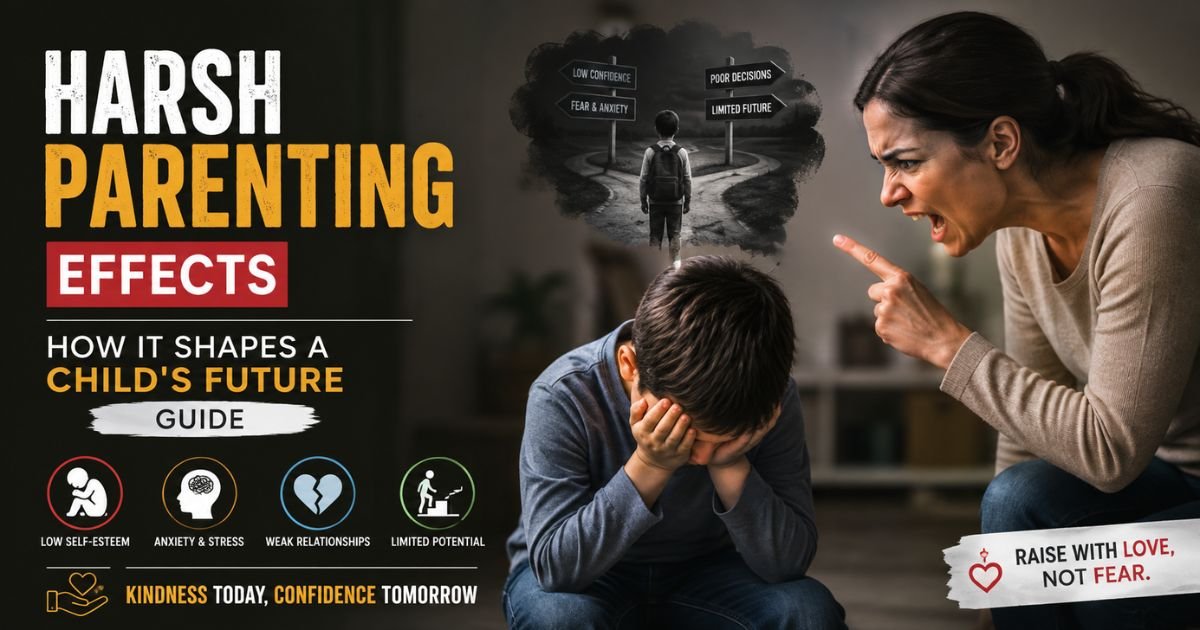
Harsh parenting effects can influence a child’s emotional, social, and cognitive development in lasting ways. Frequent yelling, criticism, strict punishment, or physical discipline may lead to anxiety, low self-esteem, behavioral problems, and difficulty building healthy relationships. This guide explains the short- and long-term effects of harsh parenting, the science behind these outcomes, and positive parenting strategies that support healthy child development.
What Is Harsh Parenting?
Definition
Harsh parenting is defined as regularly engaging in negative coercive behaviors including yelling, name-calling, hitting, criticizing, shaming, and isolating children. It’s fundamentally different from firm, consistent discipline—which sets boundaries with warmth and explanation. Harsh parenting relies on fear, shame, and control rather than teaching.
How It Looks in Real Life
Harsh parenting manifests across a spectrum. It might mean shouting frequently over minor infractions, using insults or derogatory language (“You’re so stupid,” “I’m ashamed of you”), delivering physical punishment, withdrawing affection as punishment, or alternating between leniency and sudden severity depending on the parent’s mood. Hostile parenting can involve frequent harsh treatment and discipline, physical or psychological punishment, routine physical punishment, isolating children when they misbehave, damaging their self-esteem, or punishing children depending on the parent’s mood.
The Critical Distinction: Discipline vs. Harshness
| Aspect | Firm Discipline | Harsh Parenting |
| Goal | Teach and guide | Control and punish |
| Tone | Calm, respectful | Angry, contemptuous |
| Explanation | Clear reason given | Minimal or accusatory |
| Consistency | Predictable rules | Mood-dependent |
| Child’s Emotional State | Safe, even if upset | Afraid, ashamed, confused |
| Long-term Effect | Builds responsibility | Damages self-worth |
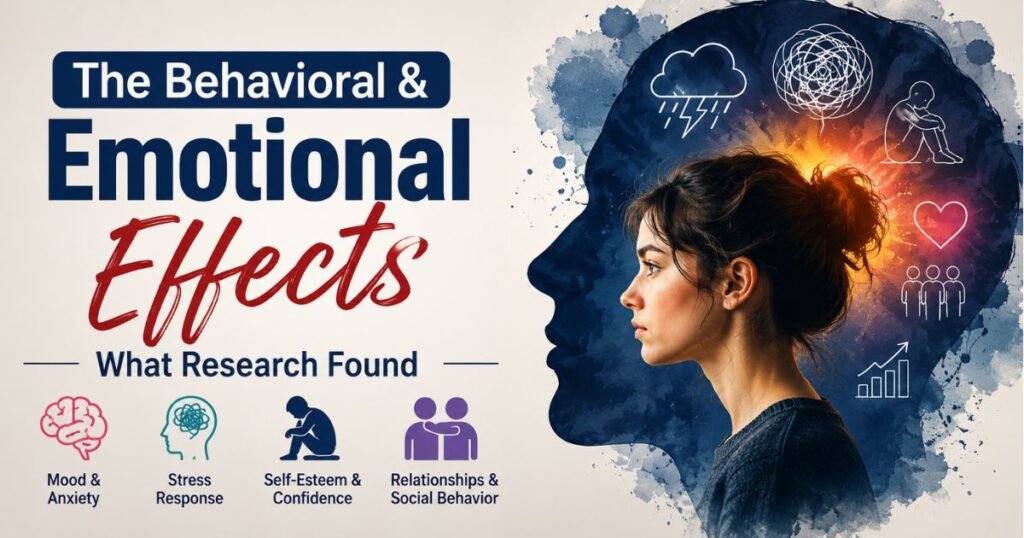
The Behavioral & Emotional Effects What Research Found
Externalizing Behaviors Outward Acting-Out
A longitudinal study following over 4,200 Brazilian children from birth to age 18 found that 45% of children had parents they considered moderately harsh, and 5% had parents considered very harsh. The impact on behavior was striking.
Children with moderately or very harsh parents were less able to regulate their emotions, experienced lower levels of self-esteem, and were less likely to help others compared to children whose parents were not harsh. Beyond emotional regulation, harsh parenting triggers visible behavioral problems.
Research across cultures confirms this pattern. A systematic review analyzing 45 studies on Chinese parents and children found that children with harsh parents were more likely to become aggressive and defiant, more likely to shout or act violently, and more likely to develop attention-deficit hyperactivity disorder (ADHD). These aren’t isolated incidents—they’re developmental trajectories shaped by consistent exposure to punitive discipline.
Why This Happens
According to child development experts, the mechanism is straightforward. “Harsh parenting may work in the short term as a mechanism for controlling behavior, but it has negative downstream consequences for children,” said Kimberly Ann Kopko, a child development expert at Cornell’s Bronfenbrenner Center for Translational Research. “When parents engage in harsh parenting, they deprive their child of the opportunity to understand how and why their behavior is problematic. Lacking an explanation for why the behavior is unacceptable, and lacking an explanation for alternative ways of behaving, children are not able to learn self-discipline or how to regulate their emotions, two very important life skills.”
Internalizing Symptoms The Invisible Struggle
While externalizing behaviors are visible—fighting, talking back, breaking rules—internalizing symptoms are often silent: anxiety, depression, rumination, and social withdrawal. They’re harder to spot but no less damaging.
Harsh parenting, characterized by frequent shouting, corporal punishment, or psychological aggression, exerts a profound influence on children’s emotional and behavioral development. Children exposed to severe or punitive discipline are more likely to exhibit internalizing symptoms including anxiety, depression, and suicidal ideation.
Research has pinpointed the exact pathway. Recent investigations have found that harsh parental discipline increases the likelihood of depressive symptoms in young people, with rumination and peer victimization operating as sequential mediators. Adolescents subjected to high levels of punitive control tend to adopt repetitive negative thinking, which amplifies sensitivity to peer mistreatment and culminates in elevated depressive scores.
The Cambridge Study: A Detailed Look
In a study of over 7,500 Irish children, researchers at the University of Cambridge and University College Dublin found that children exposed to hostile parenting at age three were 1.5 times likelier than their peers to have mental health symptoms which qualified as ‘high risk’ by age nine.
What makes this study particularly valuable is its longitudinal design—tracking the same children over time. The researchers charted children’s mental health symptoms at ages three, five, and nine, studying both internalizing symptoms (such as anxiety and social withdrawal) and externalizing symptoms (such as impulsive and aggressive behavior and hyperactivity). About 10% of the children were found to be in a high-risk band for poor mental health, and children who experienced hostile parenting were much more likely to fall into this group.
Relationship & Social Consequences
Beyond emotions and behavior lies a third tier of damage: how children relate to others.
Children of harsh parents experienced more relationship problems with their peers. This ripples outward: peer rejection in childhood predicts academic struggles, further isolation, and mental health problems downstream.
A longitudinal network analysis revealed that maternal hostility and harshness were the strongest predictors of increases in adolescent conduct problems and internalizing symptoms over eighteen months. Warmth and monitoring emerged as protective factors, suggesting that enhancing positive parental engagement may mitigate the harmful effects of punitive tactics.
Children raised in harsh environments often struggle with assertiveness, empathy development, and fear-based compliance rather than genuine respect. They may become targets for peer victimization—a cycle where harsh parenting increases rumination and peer victimization, which in turn amplifies depressive symptoms.
How Harsh Parenting Affects the Developing Brain
The damage isn’t only psychological—it’s neurobiological. The developing brain is exquisitely sensitive to the emotional climate at home.
Stress Response System Dysregulation
When a child is repeatedly harshly corrected, criticized, or yelled at, their threat-detection system (amygdala and stress response pathways) becomes hypervigilant. The body releases cortisol—a stress hormone—chronically. Over time, this dysregulates the stress response: some children become hyperalert and anxious, others become numb and withdrawn. Neither represents healthy emotional development.
Attachment & Neural Pathways
The parent-child relationship is the template for all future relationships. Harsh parenting disrupts secure attachment—the neurobiological foundation of trust, emotional regulation, and resilience. Children’s behavioral challenges and harsh parenting create bidirectional effects, with reciprocal parent-child dynamics compounding difficulties. The brain learns: “Adults are unpredictable and dangerous. Relationships are conditional on compliance.”
Long-Term Implications
A child’s capacity to self-soothe, manage frustration, and form healthy relationships is shaped in large part by early parenting. Harsh discipline starves the developing brain of the ingredients it needs—safety, predictability, warm guidance—and floods it with stress. This doesn’t mean permanent damage, but it means the child starts adulthood with a disadvantage that requires active repair.
The Intergenerational Trauma Cycle
Perhaps the most striking finding in recent research is how harshly parented children often become harsh parents—not inevitably, but at significantly elevated odds.
The Research
A Taiwanese study published recently found that parents who engaged in harsh tactics were more likely to have experienced trauma when they were children. Researchers surveyed more than 6,000 parents of children ages 6 to 12 and found that participants who adopted harsh parenting techniques were more likely to have experienced stressful or traumatic events in their own childhoods.
The Psychological Mechanism
Parents who experienced psychological symptoms as a result of their own childhood trauma were more likely to become harsh parents themselves. In addition, these parents were more likely to exhibit the symptoms of psychological disorders, such as depression, thoughts of self-harm, and anxiety. This creates a vicious loop: unhealed trauma → parental stress and dysregulation → harsh discipline → child trauma → the cycle continues.
Breaking the Pattern
The cycle is real but not destiny. Understanding its existence is the first step to interrupting it. Many parents recognize their own harsh parents in their behavior and decide to change. There are intervention programs designed to break these cycles. Researchers at the University of Washington evaluated 20 of these programs and identified five evidence-based interventions for a variety of age groups – from birth to the teen years – that demonstrate effectiveness in building parental skills.
Long-Term Outcomes Beyond Childhood
The effects of harsh parenting don’t evaporate at age 18. They travel into adulthood.
Mental Health Persistence
Children who grew up with harsh parenting often carry anxiety and depression into their 20s, 30s, and beyond. Without intervention, the rumination patterns and low self-esteem that formed in childhood become habitual. Adult relationships feel fraught with the same dynamic: fear of judgment, difficulty trusting, hypervigilance to criticism.
Relationship & Attachment Patterns
Adults who were harshly parented often struggle to form secure attachments. They may be drawn to familiar patterns—either recreating harsh dynamics with partners or struggling to accept genuine warmth, viewing it with suspicion. Some swing to the opposite extreme, becoming overly permissive to avoid repeating their parents’ behavior, which creates its own problems.
Parenting Patterns
This sets up an intergenerational cycle of traumatic childhood experiences leading to harsh parenting later in life. Yet many adults consciously choose differently. Some become overly gentle as a reaction, others seek parenting education or therapy to parent intentionally rather than reactively.
Academic & Career Impact
The self-doubt and fear of failure instilled by harsh parenting can limit academic and career achievement. Children taught through shame often develop perfectionism paired with paralysis—they aim high but avoid risk, or give up prematurely rather than risk failure.
Risk of Self-Harm
In a large cross-sectional study conducted in China, harsh parenting was linked to elevated suicidal ideation in adolescents; self-esteem was found to mediate this association, while perceived school social support buffered the indirect pathway. This underscores both the severity of outcomes and the protective power of support systems outside the home.
Protective Factors & Recovery
The research also reveals hope: harsh parenting’s damage is not irreversible. Protective factors can buffer its impact, and recovery is possible.
What Buffers the Impact
To the researchers’ surprise, warm parenting did not increase the likelihood of children being in the low-risk group, possibly due to the influence of other factors on mental health outcomes. However, consistent parenting was found to have a limited protective role, but only against children falling into the ‘mild-risk’ category. This suggests that consistency—predictable, fair rules—matters as much as warmth.
Beyond parenting, school social support and peer relationships buffer the indirect pathway from harsh parenting to depression. A single caring teacher, a close friend, a mentor—these relationships can provide the emotional anchor a harshly parented child desperately needs.
Therapeutic Pathways
Evidence-based interventions work. The programs all follow the Social Development Model, which is based on the idea that youth learn behaviors from their relationships with family, peers, and other institutions. This model provides clear expectations for behavior, focuses on bonding, and rewards positive social behaviors. Among them is the Nurse-Family Partnership, a program originally developed at Cornell’s Bronfenbrenner Center for Translational Research that supports expecting and new mothers with visits from nurses.
For children already harmed, trauma-informed therapy, play therapy, and family therapy all show effectiveness. The key is consistency: the child needs to experience, over and over, that adults can be trusted, that their feelings matter, and that they are fundamentally worthy.
Actionable Alternatives How to Parent Differently
Change is hard but possible. Here’s what evidence-based parenting looks like.
Set Boundaries Without Harshness
The Principle
Children need limits. The question is how you enforce them. Harsh parenting uses fear; authoritative parenting uses clarity and natural consequences.
In Practice
- State the rule clearly: “We don’t hit. If you’re angry, tell me with words or go to your room to calm down.”
- Explain the why briefly: “Hitting hurts people, and I need you to be safe and treat others safely.”
- Apply natural consequences: If a child breaks a toy in anger, they lose access to toys for a set time. If they refuse dinner, they’re not offered snacks later. The consequence flows logically from the choice.
- Stay calm: Your tone teaches more than your words. A calm, firm voice signals that you’re in control and the situation is manageable—very different from rage or contempt.
Key Difference
Harsh: “You’re such a brat! Go to your room!” (shame-based, no teaching)
Authoritative: “When you speak disrespectfully, you need time in your room to calm down. We can talk about what happened when you’re ready.” (boundary-based, teaches responsibility)
Connect Before You Correct
Neuroscience shows that a child in emotional distress can’t learn. If you launch into discipline while a child is flooded with anger or fear, the message doesn’t land—only the punishment does.
The Steps
- Pause: Take a breath. Model emotional regulation.
- Validate: “I see you’re really upset. That’s okay to feel.”
- Listen: “What happened?” Let them explain without interrupting.
- Then address behavior: Once they’re calmer, discuss what they did and what they’ll do differently.
This doesn’t mean no consequences. It means teaching, not just punishing.
Model What You Want to See
Children are mirror neurons—they absorb how you handle stress, disappointment, and conflict. If you yell when frustrated, they’ll yell. If you problem-solve calmly, they’ll learn to do the same.
Concrete Ways to Model
- Admit mistakes: “I yelled earlier, and I shouldn’t have. I was frustrated, but that wasn’t okay. I’m sorry.”
- Problem-solve aloud: “I’m frustrated about bedtime. How can we make this easier for both of us?”
- Regulate your emotions: Take a walk, take deep breaths, ask for a break before responding.
- Show effort: Let kids see you trying new approaches, failing, and trying again.
Evidence-Based Programs
Researchers at the University of Washington evaluated 20 parenting intervention programs and identified five evidence-based interventions for a variety of age groups – from birth to the teen years – that demonstrate effectiveness in building parental skills. These programs teach parents concrete skills grounded in social development research. They’re not quick fixes, but they work—especially for parents committed to change.
Conclusion
Understanding harsh parenting effects is the first step toward creating a healthier family environment. While discipline is an important part of parenting, combining clear boundaries with empathy, respect, and positive communication helps children develop confidence, resilience, and emotional well-being. Small changes in parenting approaches can make a meaningful difference in a child’s future.
FAQs
What is the difference between discipline and harsh parenting?
Discipline teaches; harsh parenting punishes. Discipline uses clear expectations and natural consequences. Harsh parenting relies on fear, shame, and pain. A disciplined child learns why their behavior was wrong and how to do better. A harshly punished child learns to hide behavior and fear the parent—not to develop self-control.
Can strict parenting cause anxiety in children?
Yes. Strict, high-pressure environments can lead to heightened anxiety in children who feel constantly pressured to succeed, afraid of punishment, and unable to relax, making them feel like they must be ‘perfect’ at all times. Research shows this is not theoretical—it’s measurable in children’s cortisol levels, sleep patterns, and reported worry.
How long do the effects of harsh parenting last?
Effects can persist into adulthood if unaddressed. However, they are not permanent. Children’s mental health is shaped by multiple risk factors, including gender, physical health, and socio-economic status, and protective factors—supportive relationships, therapy, safe environments—can gradually heal the damage. Recovery is possible at any age.
Can parents change their parenting style? What helps?
Yes. Change requires self-awareness, genuine motivation, and often external support (parenting classes, therapy to address your own trauma). Evidence-based intervention programs can help curb harsh parenting behaviors. Parents who recognize the pattern and seek help often succeed in breaking the cycle, and their children show marked improvement.
How do you know if you’re being too harsh as a parent?
Red flags include: yelling frequently, insulting or name-calling, punishing based on mood rather than consistent rules, using fear or shame as primary tools, or your child becoming withdrawn, anxious, or aggressive. Mental health professionals, teachers and other practitioners should be alert to the potential influence of parenting on a child who shows signs of having poor mental health. If you’re worried, that worry is often a sign to seek guidance.
Does harsh parenting affect boys and girls differently?
Research suggests some differences. Girls were more likely to be in the high-risk category for mental health problems than boys, though both genders are harmed. Girls may more often internalize (anxiety, depression, withdrawal), while boys may more often externalize (aggression, behavioral problems). However, individual variation is large—gender is not destiny
