


Your 1-month-old hasn’t pooped in two days. They’re straining, turning red in the face, and you’re starting to panic. Is this constipation? Is something wrong? Should you rush to the doctor?
Take a breath. Most newborn straining is completely normal, their muscles are still learning how to work. Constipation in a 1-month-old means hard, dry stools that are difficult or painful to pass. If your baby’s poop is soft and they’re feeding well, they’re almost certainly fine. But if you notice hard pellet-like stools, no poop for 4 or more days, or blood in the diaper, simple home remedies can help.
Let me walk you through how to tell the difference, what actually works, and when constipation really does need a doctor’s attention.
Normal Newborn Straining vs. Real Constipation
Here’s the thing about newborn digestion: your baby’s abdominal muscles are brand new. They haven’t learned to coordinate yet. Peristalsis the muscular waves that move poop through the intestines is still developing. So babies naturally strain, grunt, cry, and turn red when they poop, even when everything is perfectly fine.
This is normal. This is not constipation.
True constipation has two markers: hard, dry stools and infrequent bowel movements. The stools themselves matter more than how often they happen. A soft poop once every two days? Normal. A hard, pellet-like stool even if it’s happening daily? That’s constipation.
What Normal Looks Like at 1 Month
Your baby’s bowel movements change dramatically in the first month of life.
Days 1–3: Meconium (dark, tar-like, sticky poop)
Days 3–5: Transition stools (greenish, gradually lightening)
Day 5 onward:
- Breastfed babies: 2 or more yellow, seedy, soft stools per day (from about day 4 through week 6). After 6 weeks, some breastfed babies poop less frequently, sometimes every few days and that’s still normal as long as the stool is soft.
- Formula-fed babies: Typically 4–5 softer, paste-like, tan or yellow stools per day in the first few weeks. They may also poop less frequently than breastfed babies.
The key: If the poop is soft and your baby is feeding well, they’re doing fine—even if they strain while doing it.
When to Actually Worry
Here are the real red flags for constipation at 1 month old:
- Hard, pellet-like stools (look like little pebbles)
- No poop for 4 or more days (especially if it’s hard when it finally comes)
- Your baby cries or seems to be in pain while pooping (not just the normal newborn grunting)
- Blood on the stool or diaper
- Extreme fussiness beyond normal baby behavior
- Belly looks or feels bloated or distended
If you see these, constipation is real and needs attention. But most 1-month-olds with normal, soft stools are not constipated, no matter how much they grunt.
Read More: 1-Month-Old Baby Coughing But No Fever? What Parents Need to Know
5 Home Remedies for 1-Month-Old Constipation
If your 1-month-old does have hard stools or hasn’t pooped in 4+ days, these remedies work. Try them in this order: start with the gentlest and move up if needed.
Remedy 1: Belly Massage (Do This First It’s Immediate)
Why it works: A gentle massage stimulates the muscles that move stool through the intestines (peristalsis). It’s completely safe and can provide relief in hours.
How to do it:
- Lay your baby on their back on a soft surface
- Place your fingertips just below the belly button
- Gently massage in a clockwise circular motion (moving down on the left side of the belly, across the bottom, and up the right side following the path of the colon)
- Do this for 1–2 minutes, 2–3 times per day
- Be gentle think “soothing” not “pressing hard”
Many parents see results within 24 hours just from this technique.
Remedy 2: Bicycle Legs Exercise (Also Immediate)
Why it works: This mimics the squat position, which naturally helps stool move down. It’s the same motion babies make when they’re trying to poop, but you’re gently assisting.
How to do it:
- Lay your baby on their back
- Hold both of their ankles gently
- Slowly press one knee toward the chest, then release and do the other leg
- Repeat in a slow “pedaling” motion for 5–10 repetitions
- Do this 2–3 times daily, especially after feeds
This is safe to do daily and takes just a few minutes. You’ll often see a diaper fill up within hours.
Remedy 3: Prune or Pear Juice (The Classic That Works)
Why it works: Both prune and pear juice contain sorbitol, a natural sweetener that acts as a gentle laxative. It draws water into the stool, softening it and making it easier to pass.
How to use it safely at 1 month:
- Dose: 1–2 ounces once per day
- How to give it: Mix it into expressed breast milk or formula so your baby accepts it (pure juice is often rejected by newborns)
- Which juice: 100% prune juice or 100% pear juice—not juice cocktails or added-sugar versions
- Timeline: Expect relief in 2–3 days. If no improvement by day 3–4, talk to your doctor
- How long to continue: Once stools soften, you can stop. But if constipation comes back, you can restart
Important: Don’t use raw prune juice sold for adults or add honey (botulism risk). Stick to commercially prepared 100% juice or juice meant for babies.
Remedy 4: Extra Water (Formula-Fed Babies Only)
Why it works: Sometimes formula-fed babies don’t get enough fluids, which hardens stool. A small amount of extra water can help.
How to use it safely:
- Only after 1 month old (newborns under 1 month shouldn’t have water)
- Dose: 1–2 ounces of boiled, then cooled water between formula feeds
- When to give it: Once or twice daily
- Important: This is NOT a replacement for formula. Your baby still needs all their regular formula for calories and nutrients
Don’t overdo it: Too much water can dilute important nutrients. Stick to 1–2 ounces total per day.
Remedy 5: Evaluate Feeding Amount (The Root Cause Check)
Sometimes constipation signals that your baby isn’t getting enough food. Underfed babies can become constipated.
Signs your baby might not be getting enough:
- Fewer than 6 wet diapers per day
- Poor weight gain (losing weight or not gaining at expected rate)
- Lethargy or extreme fussiness
If you suspect this:
- Breastfeeding: contact a lactation consultant to check latch and milk transfer
- Formula feeding: verify you’re mixing formula correctly (check the label ratio of powder to water)
- Both: ask your pediatrician to weigh your baby and assess feeding
Fixing the underlying feeding issue often solves constipation completely.
Read More: 1-Month-Old Baby Milestones What to Expect & When to Worry
When Your Baby’s Diet Changes
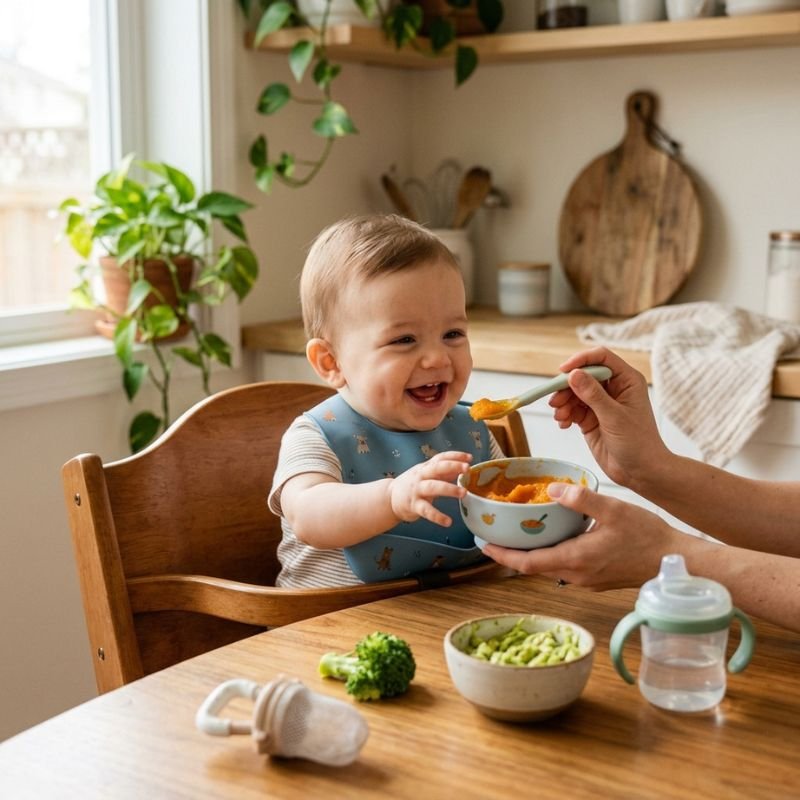
At 1 month old, your baby is still on breast milk or formula only. But it’s worth knowing that diet changes are a major constipation trigger for later, and some parents start introducing formulas to breastfed babies around this age.
Formula introduction to a breastfed baby: Even partial formula feeding can cause constipation because formula is harder to digest than breast milk. If you’re introducing formulas, expect possible constipation and use the remedies above if it happens. Some formula brands are gentler than others—ask your pediatrician if constipation becomes a chronic issue.
Starting solids (around 6 months, not yet relevant): When you eventually introduce solid foods, constipation often follows. High-fiber foods like prunes, pears, and beans help prevent it.
What NOT to Do (Safety First)
Before you try anything else, don’t do these:
- No mineral oil: Not safe for newborns; can interfere with nutrient absorption
- No stimulant laxatives or enemas: Way too strong for a 1-month-old’s system
- Don’t delay feeds: Withholding food makes constipation worse, not better
- Don’t assume straining = pain: Most baby straining is normal and doesn’t hurt them
- Don’t panic: In almost all cases, constipation in a healthy 1-month-old resolves with simple home care
Stick to gentle remedies. Your baby’s system is still maturing, and time works in your favor.
Read More: 1 Month Old Baby Captions Ideas for Instagram and Photos
When to Call Your Pediatrician
Most constipation resolves with home remedies in 3–5 days. But some situations need a doctor’s input.
Call Immediately (Same Day or ER)
- Blood in the stool (bright red or dark, tarry stool)
- Vomiting + constipation together
- Belly is hard, bloated, or your baby cries when you touch it
- Your baby is unusually lethargic (hard to wake, very floppy)
- Fever + constipation
- Your baby hasn’t had a poop in 7+ days and isn’t eating normally
Call Within 24 Hours
- No poop for 4+ days and home remedies haven’t helped after 2 days of trying
- Hard, pellet-like stools persisting despite remedies
- You suspect your baby isn’t eating enough (fewer than 6 wet diapers per day, poor weight gain)
- Constipation not improving after 5 days of home care
Call for Reassurance (Yes, This Is Normal)
Many parents call their pediatrician just to ask: “Is this normal?” or “Am I doing the right thing?” This is exactly what your pediatrician is there for. Never apologize for calling with questions. New parenthood is hard, and constipation anxiety is real.
Conclusion
Most 1-month-old straining is normal. Your baby’s digestive system is still learning how to work, and grunting or turning red during a poop doesn’t mean constipation.
Real constipation means hard, dry stools or no poop for 4+ days. If that happens, start with a gentle belly massage or bicycle legs (relief often comes within 24 hours). If that doesn’t work, try 1–2 ounces of prune or pear juice mixed into milk.
FAQs
How many dirty diapers should my 1-month-old have?
Breastfed babies should have at least 2–3 yellow, seedy stools per day (and this continues through week 6). Formula-fed babies typically have 4–5 per day, but patterns vary. What matters: the stool is soft and your baby is feeding well.
Is it safe to give a 1-month-old prune juice?
Yes, 1–2 ounces of 100% prune juice mixed into breast milk or formula is safe at 1 month old. But dilute it and mix it with milk so it goes down smoothly.
Can I use a suppository or thermometer to stimulate a bowel movement?
A glycerin suppository is sometimes recommended by pediatricians for constipation, but don’t use one without asking your doctor first. Rectal thermometers may trigger a bowel movement in very constipated babies, but again check with your pediatrician before trying this.
Will my baby’s constipation go away on its own?
Often, yes. If you’re trying gentle remedies and there are no red flags, many babies improve in 3–5 days. But if it persists beyond a week or you see blood/vomiting, call your doctor.
Does it mean my formula is wrong if my baby gets constipated?
Not necessarily. Some babies are just more prone to constipation with any formula. But if constipation is severe or chronic, your pediatrician might recommend a different formula. Changing formulas should be a deliberate choice, not a first response.
Is it normal for babies to cry while pooping?
Crying and straining while pooping is completely normal for newborns. Their muscles are developing. BUT if your baby seems to be in extreme pain or if the stool is hard and dry, that’s true constipation and deserves attention.
Can teething cause constipation at 1 month old?
A: Most babies don’t teethe until 4–6 months, so probably not at 1 month. But if your baby is drooling excessively and uncomfortable, mention it to your pediatrician to rule out other causes.
